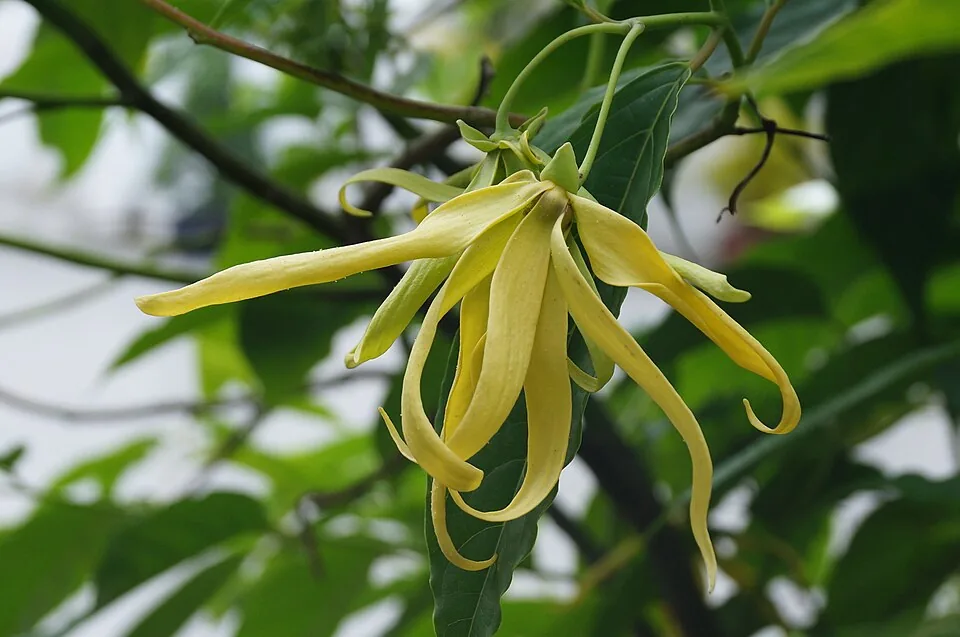
Essential oils can contribute a distinctive scent direction, but a plant-derived ingredient does not establish the safety, shelf life or suitability of the finished spray. Those questions belong to the actual composition and intended use.
Define the Product and Claims
Start with room fragrance as the intended function. If you also want fabric use, identify the specific applications and evaluate them separately. Do not add body use or cleaning claims to the same brief without the appropriate development and evidence.
Clarify what “essential oil” means in your description. Is the fragrance contribution entirely from named essential oils, or does the formula also use other fragrance materials? Keep the wording consistent with the supplied composition.
Identify the Materials
Record each oil’s supplier, material identity and relevant documentation. A common plant name can cover different materials, and supplier substitutions may change the scent or formulation behavior.
Use the guidance applicable to the exact materials and finished application. Do not infer an appropriate use level from a recipe intended for a different product type.
Evaluate the Complete Formulation
| Assessment area | Development question |
|---|---|
| Incorporation | Is the oil appropriately integrated into the chosen system? |
| Physical stability | Does haze, separation or sediment develop? |
| Sensory stability | Does scent or color change under relevant conditions? |
| Microbiological suitability | What protection and assessment are appropriate? |
| Packaging | Are bottle, pump, seals and labels compatible? |
| Use | Does the product behave as intended when sprayed? |
Have a qualified developer establish the test approach and interpret the results. A bottle that looks clear after shaking is not evidence of lasting formulation suitability.
Solubilization Does Not Establish Preservation
A material that helps incorporate oil into a spray is not automatically a preservative. Likewise, essential oils should not be relied on as the product’s antimicrobial protection simply because they are natural or aromatic.
Determine the appropriate approach for the full composition, including any water and other ingredients. Avoid using a generic internet shelf-life estimate in place of product-specific evidence.
Test the Actual Pump and Bottle
Assess the spray pattern, output, dripping and closure function with the finished formula. Check the package during relevant storage and transport conditions, not only immediately after filling.
Include labels and decorative finishes. Small leaks or liquid contact can affect presentation, and a pump that performs well with water may behave differently with the actual formulation.
Keep Use Instructions Specific
Write instructions that match the evaluated product. Identify intended use, relevant exclusions and appropriate handling information. Do not instruct customers to shake away a persistent formulation problem unless a deliberately developed, assessed system is designed for that use.
Avoid claiming that the spray is universally suitable for children, pets or sensitive occupants. Such statements require their own basis and should not follow automatically from the ingredient origin.
Substantiate Natural Positioning
Use a precise composition statement where supported. Do not imply that natural ingredients are inherently safer than other fragrance materials or that a pleasant botanical scent disinfects a room.
If therapeutic or antimicrobial claims are contemplated, obtain appropriate expert guidance and evidence before using them. A room-fragrance brief can be effective through accurate sensory description alone.
Keep the Approval Current
Retain the formula revision, material identities, package specification, test records and approved copy. Review the product when the oil source, base or pump changes.
Our fragrance creation guide supports the creative brief. Explore OLFAY products to place the spray within a coherent home fragrance range.
Frequently Asked Questions
Can essential oil and water make a complete room spray?
That is not a sufficient formulation specification. Compatibility, protection and use need assessment.
Does natural mean suitable for everyone?
No. Ingredient origin does not establish universal finished-product suitability.
Does a solubilizer also preserve the spray?
Do not assume that. Confirm each material’s function and the complete protection approach.
Can an essential oil spray be marketed as disinfecting?
Only with appropriate evidence and compliance for the exact claim and product. Fragrance alone does not establish it.
Send OLFAY your ingredient preferences and intended uses to discuss a defined spray-development brief.
Further Reading
Developing a Private Label Fragrance Product?
Talk with our team about fragrance development, packaging and production requirements.