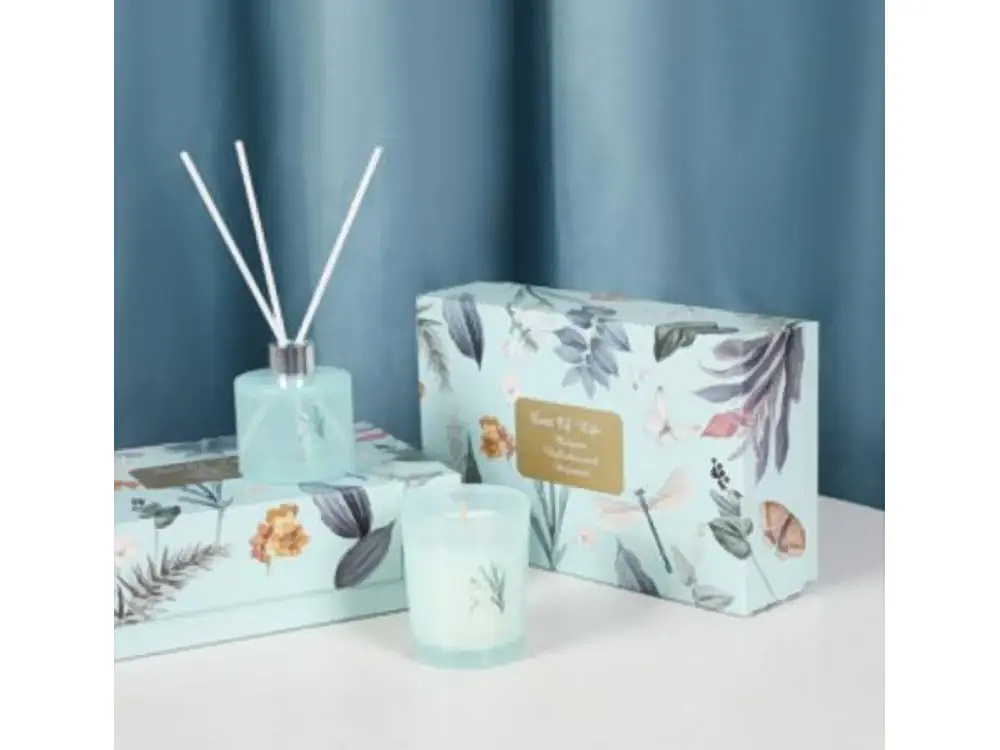
A wood wick can support a distinctive product identity. For a private label brand, that design choice should be evaluated alongside burning behavior, manufacturing consistency and customer instructions.
Wood and Cotton Are Starting Categories
Commercial wood wicks differ in dimensions, construction and supporting components. Cotton-based wick families also vary. Neither category is one standardized part that can be fitted to every candle.
Ask the supplier for the exact wick code, dimensions, holder or clip, intended applications and selection guidance. The original landing page sells a particular wood wick; its dimensions should not become a universal specification for your product.
What Can the Wick Change?
The wick affects how the candle burns and interacts with the wax-and-fragrance system. Its suitability depends on the vessel and complete formulation. A visually pleasing flame or an attractive first burn does not establish whole-life performance.
| Decision | What to compare |
|---|---|
| Visual identity | How the wick and holder look in the final vessel |
| Burning behavior | Results across the candle’s useful life |
| Fragrance delivery | Unlit and burning room impressions |
| Customer use | Clear trimming and lighting instructions |
| Supply consistency | Exact code and accepted part variation |
Do All Wood Wicks Crackle?
Do not promise a sound characteristic solely from the material category. The specific wick and finished candle must support any crackling description. Compare samples in a suitable setting if sound is part of the brief.
Record whether the desired effect is subtle or prominent. A brand should not describe a quiet sample as strongly crackling because another manufacturer’s wood-wick candle behaves differently.
Testing a Wood-Wick Configuration
Start with supplier-guided candidates suitable for the vessel and wax. Record the complete formulation and component identities. Evaluate the candle over an agreed burn protocol rather than only the first lighting.
Observe flame behavior, melt development, visible soot, stability of the wick position and other relevant acceptance criteria. Applicable standards and the supplier’s testing process should guide the assessment. A consumer-facing scent article is not a substitute for a product safety test method.
If a candidate fails, identify the issue before changing parts. A larger wick is not the automatic response to every weak scent complaint. Wax, fragrance, processing and evaluation conditions may also need investigation.
A Fair Comparison with Cotton Wicks
Give both options a suitable development configuration. Using an arbitrary identical dimension does not create a fair comparison across different wick types. Compare the finished products against the same performance and appearance objectives.
Record any differences in wick placement, number of wicks and holder. For a multi-wick candle, the arrangement itself is part of the specification and requires evaluation.
Scent preference, appearance and burning behavior should remain separate scoring categories. This prevents an attractive visual effect from hiding a product issue.
Customer Instructions Belong to the Exact Product
Use wick-specific, supplier-supported trimming and lighting guidance. Do not copy instructions from an unrelated wick family. Packaging should also provide the appropriate candle-use warnings for the intended product and destination.
If users report difficulty keeping the candle lit, collect details about their setup and follow the product’s established troubleshooting process. Avoid advising improvised additions, modifications or excessive burn sessions.
Approval and Change Control
Retain the approved sample with the exact wick code, holder, vessel, wax and fragrance revision. A later substitution that looks similar may still change burning performance.
For scent-related diagnosis, read why a scented candle may not smell. Explore OLFAY products to compare formats before choosing a custom wick arrangement.
Frequently Asked Questions
Are wood wicks better than cotton wicks?
There is no universal winner. Suitability depends on the exact finished product and your brief.
Can I replace a cotton wick with a wood wick after approval?
Treat it as a product revision and repeat the relevant candle tests.
Does a wood wick guarantee stronger fragrance?
No. Fragrance delivery depends on the complete candle system.
Are all wood-wick care instructions the same?
No. Use guidance that matches the exact approved wick and candle.
Share your vessel and wick preferences with OLFAY to discuss a tested sample configuration.
Further Reading
Developing a Private Label Fragrance Product?
Talk with our team about fragrance development, packaging and production requirements.