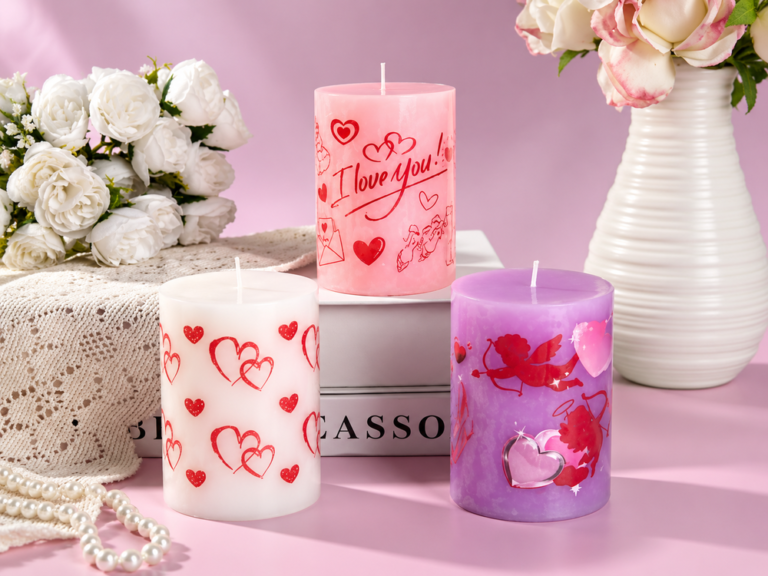
Scented candles do not usually expire in the same way as food, but their fragrance, color, wax appearance and burning performance can change over time. Heat, direct sunlight, air exposure, dust and frequent temperature changes may gradually affect the candle.
A well-made scented candle that is kept covered in a cool, dark and stable environment can remain usable for a long time. However, there is no single expiration date that applies to every candle because wax type, fragrance formula, container design, packaging and storage conditions all influence its shelf life.
This guide explains how long scented candles last, why candles can lose their scent over time, how to recognize an older candle and how to store scented candles correctly.
Do Scented Candles Expire?
A scented candle does not normally become unusable on one specific date. Instead, it may gradually lose some of the qualities it had when it was first produced.
Over time, you may notice:
- A weaker cold scent before the candle is lit
- Reduced fragrance while the candle is burning
- Fading or yellowing of the wax
- Changes in the wax surface
- Dust or debris inside the container
- A dry, brittle or discolored wick
- Less consistent burning performance
These changes do not always mean the candle must immediately be discarded. However, they can indicate that the candle has aged or has not been stored under suitable conditions.
What Does “Expiration” Mean for a Scented Candle?
For scented candles, expiration is usually better understood as a decline in product quality rather than a strict end date.
Four separate qualities may change:
- Fragrance quality: The scent may become weaker or smell slightly different.
- Visual quality: The wax or color may fade, yellow or develop surface changes.
- Burn performance: The wick, wax and fragrance system may no longer burn as consistently.
- Container condition: Glass, lids or decorative components may become damaged during storage.
This is why candle shelf life should not be judged by fragrance alone. The entire candle—including the wax, wick, container and packaging—should be checked before use.
Do Candles Lose Their Scent Over Time?
Yes, candles can lose some of their scent over time, especially when they are exposed to heat, light and air.
Candle fragrance is created by blending fragrance materials into wax. Although the wax holds the fragrance, long-term exposure to unsuitable conditions can gradually affect the fragrance profile.
CandleScience notes that raw fragrance oils are affected by time, temperature, air and light, and recommends storing them in a cool, dark place. A finished candle is different from a bottle of raw fragrance oil, so the fragrance oil’s stated shelf life should not be treated as the candle’s expiration date. However, the same environmental factors help explain why careful candle storage matters.
Why Does a Scented Candle Lose Its Fragrance?
Several factors may contribute to scent loss.
Heat Exposure
High temperatures can soften or partially melt candle wax. Repeated heating and cooling may also affect the wax surface and fragrance distribution.
Candles should not be stored near:
- Radiators
- Heating vents
- Ovens
- Hot windowsills
- Vehicles during warm weather
- Warehouses with uncontrolled high temperatures
Direct Sunlight
Sunlight may fade colored wax, labels and decorative finishes. It can also heat the container and expose the candle to repeated temperature changes.
Yankee Candle’s current candle-care guidance recommends storing candles in a cool, dark location away from direct sunlight and heat sources.
Air Exposure
Leaving a candle uncovered for long periods allows dust and debris to settle on the wax. It also exposes the fragrance surface to the surrounding air.
A lid, bell cover or protective outer box helps keep the candle clean between uses.
Fragrance Composition
Different fragrance formulas age differently. Citrus, floral, woody, gourmand and aromatic fragrance profiles contain different combinations of materials, so they may not change at exactly the same rate.
Wax and Fragrance Compatibility
The wax must be able to hold and release the chosen fragrance effectively. A formula that has not been properly tested may show poor scent throw, surface oil or inconsistent burning even when the candle is relatively new.
How Long Do Scented Candles Last?
There is no universal scented candle shelf life.
How long a candle lasts depends on whether you are asking about:
- How long it can be stored
- How long it keeps its fragrance
- How many hours it burns
- How long it remains visually suitable for retail
- How long it performs consistently after the first use
These measurements should not be confused.
Scented Candle Shelf Life vs Burn Time
Shelf life describes how long the candle can remain in storage while maintaining acceptable fragrance, appearance and performance.
Burn time describes the approximate number of hours the candle can burn after it is lit.
For example, the Private Label Velvet Bell Jar Scented Candle has a listed wax weight of 150 g and an approximate burn time of 30 hours. That 30-hour figure refers to expected burning duration, not how long the unopened candle can remain in storage. The product also uses a 6% fragrance load and a plant soy-blend wax.
How Long Do Unopened Scented Candles Last?
An unopened or unused candle generally has the best chance of maintaining its fragrance and appearance when it remains:
- Covered
- Protected from dust
- Away from sunlight
- Away from excessive heat
- In stable temperatures
- Inside suitable protective packaging
Rather than relying on one fixed number of months or years, retailers and consumers should assess the candle’s actual condition.
How Long Do Used Scented Candles Last?
After a candle has been burned, the wax surface becomes exposed and may collect soot, wick trimmings or dust.
A used candle should be allowed to cool completely before it is covered. Before the next use, inspect the wick, wax pool and container.
For better burning performance, the National Candle Association recommends trimming the wick to approximately ¼ inch before use and keeping the wax pool free of wick trimmings and debris.
What Affects Scented Candle Shelf Life?
The following factors have the greatest influence on how well a scented candle maintains its original quality.
| Factor | Possible effect | Recommended action |
|---|---|---|
| Direct sunlight | Faded wax, labels or packaging | Store in a dark cabinet or protective box |
| Excessive heat | Softened wax, fragrance changes or surface movement | Keep away from heat sources |
| Temperature fluctuations | Cracking, sweating or uneven wax appearance | Maintain a stable storage environment |
| Open container | Dust, debris and greater air exposure | Use a lid, bell cover or outer box |
| Poor packaging | Scratches, broken glass or damaged presentation | Use protective inner and outer packaging |
| Long inventory periods | Reduced fragrance or visual quality | Rotate stock and inspect samples periodically |
Wax Type
Soy blends, paraffin blends, coconut blends, rapeseed blends and beeswax-based candles have different textures, melting characteristics and fragrance-holding properties.
The wax type alone does not determine whether a candle is high quality. A successful candle depends on how the wax, fragrance, wick and container work together.
Fragrance Load
A higher fragrance load does not automatically mean a longer shelf life or stronger scent throw.
Adding too much fragrance may cause problems such as:
- Surface oil
- Poor wax stability
- Wick performance issues
- Incomplete combustion
- Inconsistent hot throw
The fragrance percentage should remain within the limits recommended for the selected wax and should be confirmed through sample and burn testing.
Wick Selection
The wick controls how the wax melts and how fragrance is released while the candle burns.
A wick that is too small may create a limited melt pool and weak hot throw. A wick that is too large may create an excessive flame, faster burning or soot.
Wick size should therefore be selected according to:
- Container diameter
- Wax type
- Fragrance load
- Dye or additives
- Expected burn performance
Container and Cover
A secure lid or decorative bell cover helps protect the wax surface from dust when the candle is not being used.
The container should also be inspected for:
- Cracks
- Chips
- Loose decorative parts
- Damage caused during shipping
- Signs of extreme temperature exposure
How Can You Tell If a Scented Candle Is Too Old?
An older candle may still appear usable, but it should be inspected before lighting.
1. The Scent Has Become Very Weak
Smell the candle before lighting it. A weaker cold throw does not always mean the candle cannot burn, but it may indicate fragrance loss.
2. The Fragrance Smells Noticeably Different
If the scent has changed significantly from its original profile or smells unpleasant, the candle may no longer provide the intended fragrance experience.
3. The Wax Has Changed Color
Some color change can occur naturally, particularly in lighter waxes or formulas containing certain fragrance materials.
However, major or uneven discoloration may reduce the candle’s retail appearance.
4. The Wax Surface Has Changed
Depending on the wax type and temperature history, the surface may show:
- Frosting
- Cracks
- Wet spots
- Sweating
- Shrinkage
- Dust accumulation
Not every cosmetic change makes the candle unusable, but it may indicate aging, temperature stress or formula instability.
5. The Wick Is Damaged
Do not light the candle if the wick is loose, buried, broken, heavily contaminated or positioned in a way that may create an unstable flame.
6. The Glass Is Cracked or Chipped
A candle in a damaged glass container should not be burned. Heat may worsen existing damage.
How to Store Scented Candles Properly
Correct storage helps preserve fragrance, appearance and burn quality.
Store Candles in a Cool, Dark Place
Choose a location away from direct sunlight and strong heat sources.
Suitable locations may include:
- A closed cabinet
- A storage drawer
- A temperature-controlled stockroom
- A shelf away from windows
- Protective retail cartons
Current candle-care guidance recommends keeping candles cool, dark and covered, while avoiding sudden temperature changes.
Keep the Candle Covered
Use the original:
- Lid
- Bell cover
- Dust cover
- Product box
- Protective sleeve
Allow a recently extinguished candle to cool completely before replacing its lid or cover.
Avoid Frequent Temperature Changes
Do not repeatedly move candles between very hot and very cold environments.
Temperature fluctuation can affect the wax surface and may cause:
- Cracking
- Shrinkage
- Sweating
- Partial melting
- Changes in container adhesion
Store Candles Upright
Container candles should remain upright during storage and transportation. This helps protect the wick position, wax surface and decorative presentation.
Keep the Wax Surface Clean
Before lighting, remove dust, wick trimmings and other debris from the wax.
The National Candle Association advises keeping the wax pool free from matches, wick trimmings and other material that could interfere with safe burning.
How Should Retailers Store Scented Candle Inventory?
Retail and private-label candle projects require more than household storage advice.
Businesses should consider:
Warehouse Conditions
Candles should be stored in a clean, dry and temperature-stable area. Pallets and cartons should be kept away from heat, strong sunlight and water exposure.
Protective Packaging
Packaging should protect:
- Glass vessels
- Wax surfaces
- Lids and bell covers
- Labels
- Printed finishes
- Gift boxes
Internal dividers, protective sleeves and export cartons may be needed for international shipping.
Use an organized stock-rotation system so older inventory is reviewed and dispatched before newer inventory where appropriate.
Retained Samples
For larger private-label projects, retaining production samples can help brands compare:
- Fragrance strength
- Wax appearance
- Wick condition
- Packaging quality
- Long-term storage performance
Retail Display Conditions
Candles displayed near sunny shop windows, heaters or strong lighting may age differently from stock kept inside cartons.
Brands should consider both warehouse storage and retail display when approving the final formula and packaging.
Can You Restore the Scent of an Old Candle?
It is usually not possible to fully restore a fragrance that has faded inside a finished candle.
Do not pour additional fragrance oil onto the surface of an existing candle. The added oil may not bind correctly with the wax and could interfere with safe burning.
Instead:
- Check whether the weak scent is caused by storage or by burn performance.
- Trim the wick before the next use.
- Allow the candle to develop an appropriate melt pool.
- Burn it away from strong drafts.
- Stop using it if the flame or container behaves abnormally.
For the first burn, allowing the melt pool to reach close to the container edges can help reduce tunneling. The National Candle Association explains that an insufficient first burn may create a memory ring that affects later burns.
Is an Old Scented Candle Safe to Burn?
Age alone does not determine whether a candle is safe.
Before burning an older candle, check:
- Is the container free from cracks and chips?
- Is the wick centered and secure?
- Is the wax free from debris?
- Is the candle standing on a stable, heat-resistant surface?
- Does the candle still have its original warning label?
- Does the flame remain stable after lighting?
Stop using the candle if:
- The container is damaged
- The flame becomes excessively high
- The candle produces unusual smoke
- The wick moves close to the glass
- The container becomes visibly unsafe
- The candle no longer burns consistently
The National Candle Association advises burning candles within sight, keeping them away from combustible items and placing them on stable, heat-resistant surfaces.
Why Manufacturing and Packaging Affect Candle Shelf Life
Storage begins after production, but long-term candle quality is influenced much earlier.
During product development, the manufacturer should evaluate the candle as a complete system:
- Fragrance formula
- Wax blend
- Fragrance load
- Wick type and size
- Container diameter
- Cover or lid
- Decorative finish
- Outer packaging
- Shipping environment
- Expected inventory period
A fragrance that performs well in one wax may not perform identically in another. The same wick may also burn differently when the container diameter, fragrance percentage or wax blend changes.
This is why sample development and burn testing are important for private-label candles.
What Should Be Reviewed Before Bulk Production?
For an OEM or private-label scented candle project, brands should confirm:
- Cold scent before burning
- Hot scent during burning
- Wick stability
- Melt-pool development
- Approximate burn time
- Wax surface after curing
- Glass and component quality
- Label adhesion
- Gift-box protection
- Carton suitability for export
These checks help reduce the risk of discovering fragrance, burning or packaging issues after bulk production.
Private Label Candle Example: Velvet Bell Jar Scented Candle
The Private Label Velvet Bell Jar Scented Candle is designed for retail fragrance brands, gifting, hospitality projects and private-label collections.
Its listed specification includes:
- 150 g wax weight
- 6% fragrance load
- Approximately 30 hours of burn time
- Plant-based fragrance oil
- Plant soy-blend wax
- Decorative velvet jar and bell-cover design
- Custom fragrance options
- Custom labels and gift packaging
- Sample support before bulk production
The bell-cover format provides a practical way to keep the candle covered between uses, while the decorative vessel supports premium retail and gifting applications.
Olfay can arrange samples for fragrance, burn performance, vessel and packaging review before bulk production. Final specifications should be confirmed according to the target market, packaging requirements and order quantity.
Final Thoughts
So, do scented candles expire?
They do not normally have one universal expiration date, but they can gradually lose fragrance, change appearance and deliver less consistent burning performance.
To help scented candles last longer:
- Keep them covered
- Store them in a cool, dark place
- Avoid direct sunlight and heat
- Minimize temperature fluctuations
- Keep the wax and wick clean
- Inspect older candles before lighting
- Use protective packaging for retail and wholesale storage
For private-label brands, long-term quality begins with proper fragrance, wax, wick, vessel and packaging development—not only with storage after production.
Looking for a customizable candle for your retail, gifting or hospitality collection?
Explore the Private Label Velvet Bell Jar Scented Candle or contact Olfay to discuss fragrance selection, sample testing, custom labels and retail-ready packaging.
Developing a Private Label Fragrance Product?
Talk with our team about fragrance development, packaging and production requirements.