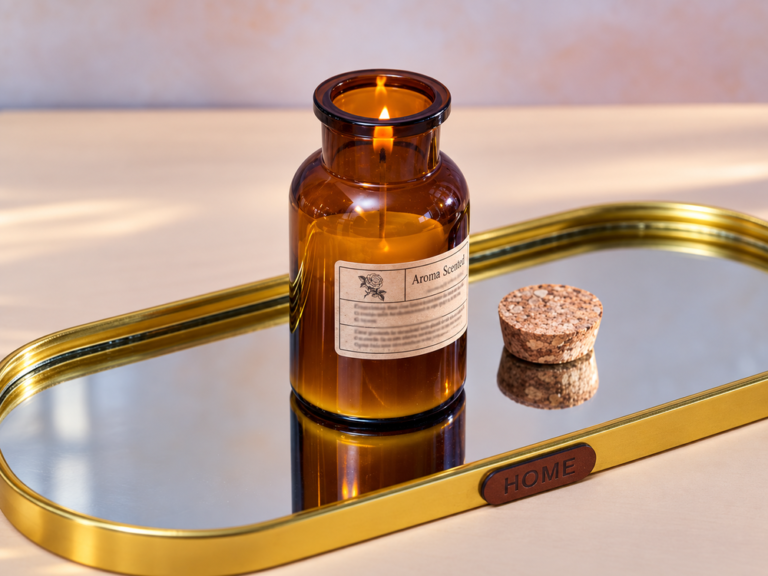
A request for an “amber candle” can mean vanilla-rich comfort, dry resinous depth or a more contemporary woody impression. Understanding those differences helps a brand choose samples that fit its identity.
Amber Is a Fragrance Idea, Not One Fixed Ingredient
Traditional amber accords are associated with materials such as labdanum, benzoin and vanilla. Modern interpretations can use other materials to create warmth, texture and diffusion. A product’s notes list is a description of the scent experience; it does not establish the full formula.
This distinction also separates amber from ambergris and from names applied to individual woody aroma materials. Similar words on labels do not mean identical origins, ingredients or odor profiles. Ask what the developer intends by “amber” before comparing samples.
How to Describe an Amber Scent
Rather than saying only “rich,” describe the balance you want. A sweet amber may feel soft and enveloping. A drier interpretation may emphasize woody, resinous or leathery character. Powdery amber can feel smoother and more understated, while spice can introduce contrast.
| Direction | Useful briefing language | What to avoid if it conflicts with your brand |
|---|---|---|
| Soft amber | Rounded, softly sweet, gentle warmth | Heavy dessert sweetness |
| Resinous amber | Balsamic, dry, textured | An overly smoky or medicinal impression |
| Woody amber | Warm wood, clear structure | Excessive sharpness or force |
| Powdery amber | Smooth, intimate, restrained | A cosmetic-powder character that overwhelms the scent |
These are creative categories, not standardized grades. The same fragrance may sit between them.
Amber vs Vanilla, Musk and Sandalwood
Vanilla commonly provides a recognizable sweet impression; amber can contain that sweetness while adding broader resinous or woody character. Musk is a separate fragrance vocabulary, often used to describe softness, cleanliness or diffusion. Sandalwood suggests a woody direction that may feel creamy or dry depending on the material and composition.
An amber formula can include all three impressions. The important task is to identify which should lead. If every reference sample is described as “warm and luxurious,” make a side-by-side comparison and write down specific differences in sweetness, dryness and texture.
Pairing Amber with a Clear Purpose
For an evening collection, discuss a dry amber-and-wood direction that maintains warmth without becoming syrupy. For a lighter all-season range, consider a citrus opening over a restrained amber base. A floral amber can create a more expressive centerpiece, while an incense-inspired version may suit customers who prefer resinous complexity.
These directions are proposals for development, not claims that a named OLFAY formula is already available. Select the concept that complements your other scents. Three different fragrances dominated by similar sweet amber warmth can feel less varied than their note lists suggest.
Testing Amber Across Home Fragrance Formats
A candle sample should be assessed both unlit and during a controlled burn evaluation. Check whether the warm character remains balanced as the fragrance fills the room. The scent experienced close to the jar is not the whole customer experience.
For a reed diffuser, evaluate the complete liquid with the intended reeds and bottle. Dense-sounding scent names do not predict liquid viscosity or diffusion; actual composition and the carrier system determine performance. For a room spray, compare the initial impression and the remaining ambient scent, rather than choosing solely by the first spray.
Building a Better Amber Brief
Start with three decisions: how sweet, how dry and how intense the product should feel. Add the intended setting, preferred format and any impressions to avoid. Bring an approved reference sample where possible, then request a contrasting sample so the development direction becomes clearer.
An internal score sheet can use separate columns for sweetness, resinous character, woodiness and overall preference. Keep preference separate from strength: the most intense amber is not automatically the most suitable one.
For more on how scent impressions are constructed, read our fragrance accords guide and fragrance creation overview.
Frequently Asked Questions
Is amber a natural fragrance?
Amber is an accord name. A formula may contain natural and synthetic materials; the name alone cannot establish its ingredient composition.
Does amber always smell sweet?
No. Some interpretations are sweet and vanilla-like, while others are drier, woody or resinous.
Is amber the same as ambergris?
No. The words refer to different fragrance concepts and materials. Confirm the exact description used by your supplier.
Can amber work in a fresh collection?
Yes, as a creative direction. A restrained amber foundation can support citrus or floral brightness, provided the finished sample has the balance you want.
To discuss an amber-led candle, diffuser or spray, send OLFAY your fragrance brief with the desired warmth, sweetness and product formats.
Further Reading
Developing a Private Label Fragrance Product?
Talk with our team about fragrance development, packaging and production requirements.