Two reed diffusers can use the same scent direction and still create very different experiences. One may produce a strong first impression but empty quickly. Another may look clear in the bottle while delivering a weak scent.
For a private label brand, the base is part of the complete product specification. This guide explains what to ask, what to test and how to compare samples without relying on a universal formula.
What Is a Reed Diffuser Base?
A reed diffuser base is a liquid carrier intended to help a compatible fragrance move through the reeds and release into the surrounding air. Some bases are individual materials; others are blends developed for passive diffusion.
The base contributes to the behavior of the finished liquid, including its flow and evaporation. Its own odor can also influence the scent impression. A base described as neutral should still be evaluated with the fragrance you intend to sell.
| Term | What it usually describes | Purchasing question |
|---|---|---|
| Fragrance concentrate | The scent composition before final dilution | Is this exact material intended for reed diffuser use? |
| Reed diffuser base | The carrier or carrier blend | Which fragrance and reed combinations have been tested? |
| Finished diffuser liquid | The blend supplied for the intended finished product | What are the agreed specifications and test conditions? |
Why a Clear Mixture Is Only the First Check
A transparent liquid is a useful observation, but it cannot establish scent performance or shelf stability on its own. A sample may remain clear on the day of mixing and change after storage or temperature exposure. A mixture may also look acceptable while its scent balance is unsuitable for the target room.
Ask your supplier to distinguish the mixing assessment from the finished-product assessment. The first asks whether the materials form an acceptable blend; the second asks whether the product performs and remains acceptable under defined conditions.
Five Criteria for Comparing Reed Diffuser Bases
1. Compatibility with the Exact Fragrance
Evaluate the actual fragrance code and the intended blend, not just another scent from the same family. “Woody” or “citrus” does not identify all the materials that affect a formula. Record separation, haze, sediment and any meaningful change in odor.
2. Performance with the Intended Reeds
Reed material, dimensions and count belong in the sample specification. If you compare two bases with different reeds, you are testing two systems at once and may not know which change caused the result.
A useful first comparison holds the fragrance, bottle, fill and reed specification constant. Once you understand that result, the developer can explore changes to the reed configuration.
3. Balance Between Scent and Consumption
Strong diffusion and long life are related objectives, but they should be measured separately. Track remaining liquid or product mass consistently and assess the scent at agreed intervals. A product that consumes liquid quickly does not necessarily offer the best customer experience.
Decide which balance suits your positioning. A subtle desk diffuser and a more expressive living-room product may require different development briefs.
4. Storage and Appearance Stability
Define the storage conditions, duration and acceptance criteria before testing. Record color, clarity, odor and any deposits. Keep a retained sample so the production batch can be compared with the approved reference.
Temperature studies are useful development tools, but a short test should not automatically become a long shelf-life claim. Agree with the supplier on what the evidence supports.
5. Packaging Compatibility
Test the finished liquid in the chosen bottle with its actual stopper, cap and decorative components. Include closure performance and contact with labels or finishes where exposure could occur.
A bottle that looks suitable does not prove that every closure material works with every fragrance liquid. Packaging approval and liquid approval should refer to the same final configuration.
How to Run a Useful Sample Comparison
The following is a proposed buyer’s comparison framework, rather than an industry test standard or a fixed recipe:
- Write the brief. Define the product’s setting, preferred scent impression, bottle size and desired balance of intensity and useful life.
- Identify each sample. Record the fragrance code, base code, formulation revision and preparation date.
- Control the setup. Use the same agreed bottle and reed specification when comparing bases. Note room conditions and placement.
- Record observations. Assess clarity, odor, scent intensity and consumption at consistent intervals. Use more than one sample per configuration where practical.
- Approve the complete system. Confirm the final liquid, reeds, closures, packaging and instructions together.
This approach makes the decision traceable. It also gives you a more useful discussion than simply choosing whichever sample smells strongest during the first few minutes.
Is There One Correct Fragrance Percentage?
No single percentage applies to every fragrance and base. The material supplier’s recommendations, application-specific limits and finished-product testing all matter. The concentration used in a tutorial belongs to that tutorial’s named materials; it is not automatically appropriate for another formula.
Increasing fragrance content is not a reliable shortcut to better diffusion. Ask the developer to explain why the proposed blend was selected and to provide comparison results where available.
Can Reed Diffuser Liquid Be Used in Other Devices?
Do not assume interchangeability. Reed diffusers, heated oil burners and waterless cold-air devices release fragrance through different systems. A liquid intended for passive reeds may not be approved for a heated or nebulizing device.
If your collection includes multiple formats, request separate compatibility confirmation for the exact device and liquid. Keep a common scent identity as a creative goal while allowing the technical formulation to be adapted.
What Should a Brand Request from Its Supplier?
- The identity and intended use of the base and finished liquid.
- The fragrance code and approved formulation revision.
- Recommended reeds, bottle and closure configuration.
- Application-specific fragrance documentation and relevant safety data.
- The proposed sampling, stability and performance evaluation plan.
- Agreed batch checks and the retained approval sample.
Review documentation for the product and destination you actually plan to sell. Material documents support development decisions; they should not be presented as a blanket approval for every finished product or market.
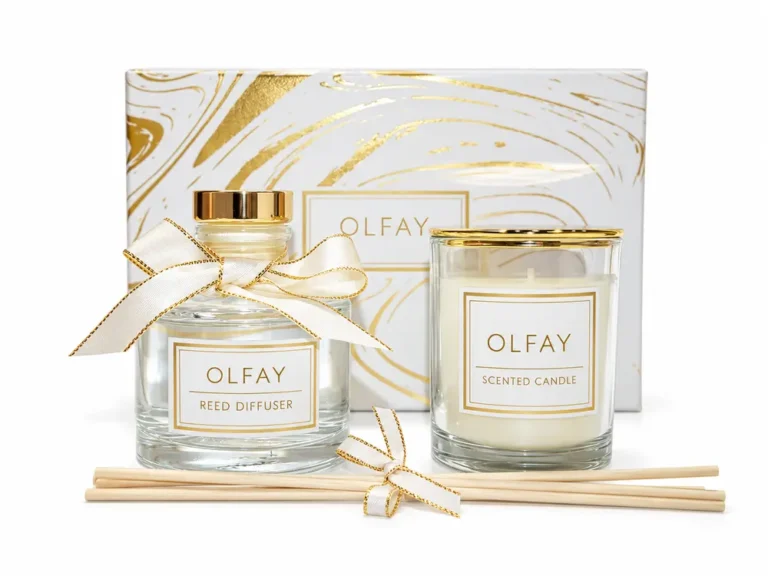
Explore OLFAY reed diffuser products for format ideas, and read how a fragrance brief becomes a finished scent for the creative side of development.
Frequently Asked Questions
Is diffuser base the same as diffuser oil?
Terminology varies. “Base” generally means the carrier, while “diffuser oil” may mean a concentrate or a ready-to-use liquid. Confirm exactly what a quotation includes.
Can I use a candle fragrance in a reed diffuser?
Only if the exact fragrance is appropriate for reed diffuser use and works in the selected formulation. Candle suitability does not establish diffuser suitability.
Does more fragrance make a reed diffuser stronger?
Not necessarily. Evaluate the finished system rather than treating concentration as the only performance variable.
Should I choose the base before the bottle?
You can shortlist them separately, but final approval should use the intended liquid, bottle, reeds and closures together.
Further Reading
Supplier references used for terminology and application examples include CandleScience’s Reed Diffuser Base information, its named-material reed diffuser tutorial, and its diffuser compatibility guidance. The comparison framework in this article is original buyer guidance; supplier claims apply to the products they identify.
Developing a Private Label Fragrance Product?
Talk with our team about fragrance development, packaging and production requirements.